

Modern Facades with GRC Technology: Takween Industrial Solutions for Contemporary Projects
Exterior facades are no longer merely decorative elements; they have become an essential part of a building’s identity, performance, and sustainability. In this context, Modern Facades made with Glass Fiber Reinforced Concrete (GRC) stand out as a solution that combines architectural flexibility, lightweight construction, durability, and design versatility. Takween Industrial Company provides integrated solutions for designing, manufacturing, supplying, and installing exterior facades for various sectors, including residential, commercial, educational, medical, and hospitality projects.
The Importance of GRC in Modern Facades Design
GRC consists of a cement-based mixture reinforced with alkali-resistant glass fibers, providing suitable strength while weighing less than traditional concrete elements. These properties help reduce structural loads and facilitate transportation and installation while maintaining a durable appearance and a service life suitable for outdoor applications.
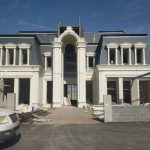
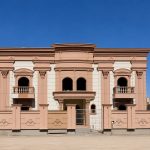
The material’s design value lies in its ability to accommodate curved lines, decorative details, cornices, columns, domes, and panels with unconventional shapes. GRC can also be used to develop Modern Facades that reflect the identity of a project, whether the design is simple and contemporary or classical with intricate details.
In addition, selecting the appropriate facade system helps in addressing climatic conditions, such as heat, humidity, and exposure to ultraviolet radiation. However, the final performance depends on the quality of the mix, manufacturing precision, fixing point design, and proper installation in accordance with the project’s drawings and specifications, ensuring Modern Facades that combine aesthetics and performance.
To learn more, explore our services and discover how we meet your project requirements with efficiency and high quality.


Why Choose Takween Industrial for Modern Facades?
Takween Industrial has over 25 years of experience in glass fiber-reinforced products, including GRC, GRP, GRG, and UHPC. The company also relies on modern industrial equipment and technologies, along with a team of engineers and technicians, to deliver solutions tailored to each project’s requirements. This supports the development of Modern Facades that align with the architectural vision and technical needs of each facility.
Its key advantages include:
- Providing an integrated service that begins with understanding the design and extends through supply and installation.
- Developing customized solutions for residential, commercial, industrial, educational, medical, and hospitality projects.
- Combining creative ideas with manufacturing precision.
- Maintaining a strong focus on quality and after-sales services.
- Utilizing local materials and resources to help reduce reliance on imported products.
- Providing insulation and resistance solutions when enhanced building protection and sustainability are required.
Examples of Previous Modern Facades Projects
Previous projects should be showcased on the company’s official website, documenting each project’s name, location, scope of work, and construction photographs rather than relying solely on general statements. Published information indicates that Takween serves various types of facilities, demonstrating its ability to adapt facade solutions to different functions and architectural requirements and deliver Modern Facades suited to the nature of each project.
To strengthen client confidence, the company can create a project portfolio highlighting completed facades, detailed design samples, manufacturing stages, and installation methods, while specifying the materials used and the company’s scope of responsibility for each project.
Innovation and Technology in Facade Design
Modern design begins with an accurate three-dimensional model that translates the architectural concept into panels and molds ready for manufacturing. Coordinating the design with structural, mechanical, and electrical engineering helps minimize conflicts before production begins, supporting the delivery of Modern Facades with greater precision and improved efficiency.
Digital modeling, computer-aided manufacturing, GRP molds, and quality control technologies can also be used to improve repeatability and dimensional accuracy.
Technology should focus on practical outcomes: reducing waste, shortening the design cycle, improving finishing quality, and facilitating future maintenance. Sustainability, meanwhile, can be achieved by selecting suitable materials, managing waste, and designing long-lasting facades that are easy to maintain.
Future Trends in Facades
The facade industry is moving toward modular systems, prefabrication, integration between BIM and manufacturing, and the use of algorithms to develop highly efficient forms. Facades that support energy efficiency, improve thermal comfort, and reduce operating costs will also become increasingly important.
Composite materials such as GRC and UHPC will give designers greater freedom to create lightweight, precise, and sustainable Modern Facades that combine aesthetic value with technical performance and meet the requirements of contemporary architecture.
Access Takween’s solutions with ease and contact us today to help you execute your project with high efficiency.
لا تعليق