
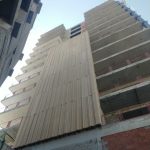
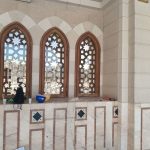

Saudi Arabia is currently witnessing an unprecedented construction wave — towers, hotels, shopping complexes, and giant projects stretching from Riyadh to NEOM to the Red Sea. At the heart of this wave is a technical question that occupies every engineer and developer: which material can cover massive facades with high quality, light weight, and reasonable cost?
The answer that engineers and architects in Saudi Arabia and the Gulf converge on is The Role of GRC in Large-Scale Facade Projects — the material that has proven its worth in the most demanding environments and the largest projects.
Why do large-scale facades need a different material?
Large building facades present challenges not faced by smaller projects:
First, the total weight of cladding on a building spanning hundreds of square meters can add massive structural loads, raising the overall project cost.
Second, speed of execution in major projects comes with a direct cost — every week of delay means a real loss.
Third, visual uniformity across vast areas requires a material that can be produced in standardized molds with high precision.
The Role of GRC in Large-Scale Facade Projects is designed to solve all three of these challenges at once.
The Role of GRC in Large-Scale Facade Projects: Key Technical Advantages
1. Lightweight on a large scale
In large building facades, the difference between a material weighing 20 kg/m² and another weighing 120 kg/m² is a huge structural difference. The Role of GRC in Large-Scale Facade Projects comes much lighter than traditional concrete or natural stone, reducing loads on the supporting structure and saving overall construction costs.
2. Standardized molds and serial production
Large facade projects require thousands of identical pieces with high precision. The Role of GRC in Large-Scale Facade Projects is produced from molds that can be repeated hundreds of times with the same specifications and dimensions, ensuring complete visual uniformity across the entire facade.
3. Faster execution and reduced installation time
The pieces are prefabricated in the factory and arrive on-site ready for installation — significantly reducing field work time and reliance on skilled labor compared to traditional materials.
4. High-performance building material resistant to the Saudi climate
Extreme heat, UV rays, and sand-laden winds create a harsh environment for exterior facades. The Role of GRC in Large-Scale Facade Projects is manufactured to withstand these conditions without cracking, erosion, or color change over the long term.
5. Design flexibility serving the project’s visual identity
Whether the project has a classic Islamic or bold contemporary style, The Role of GRC in Large-Scale Facade Projects responds to any design approach — from smooth surfaces to intricate detailed ornaments — making it a flexible material serving the identity of any project, regardless of size.
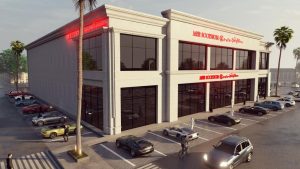
For more details, check out our services and see how we meet your project requirements efficiently and with high quality.
Applications of The Role of GRC in Large-Scale Facade Projects in major Saudi projects
Large building facades in the Kingdom include a wide range of projects where The Role of GRC in Large-Scale Facade Projects has proven its strong presence:
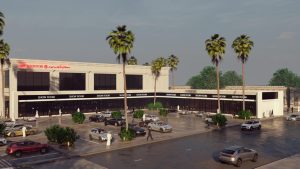
– Commercial and residential towers in Riyadh, Jeddah, and Dammam requiring light and uniform cladding at great heights.
– Luxury hotels and Red Sea resorts requiring facades with distinctive architectural character that withstand the coastal environment.
– Large shopping and entertainment complexes needing massive facade areas with attractive designs at reasonable costs.
– Government buildings and public facilities demanding high-performance building materials with strict quality standards and long service life.
– Tourism infrastructure projects under Vision 2030 combining aesthetics and durability across diverse environments.
The Role of GRC in Large-Scale Facade Projects and Vision 2030: Strategic Alignment
Vision 2030 drives hundreds of massive projects simultaneously — all sharing common requirements: high quality, fast execution, sustainability, and an authentic Saudi visual identity.
The Role of GRC in Large-Scale Facade Projects naturally meets these requirements — it is an environmentally friendly material that reduces the use of natural resources and supports sustainable construction trends prioritized by Vision 2030. Its ability to replicate Islamic, Najdi, and Hejazi architectural elements also makes it an ideal tool to express national identity in major projects.
Takween Industrial: Expertise Matching Your Project Scale
Takween Industrial has the technical expertise and production capacity to serve large-scale facade projects in the Kingdom — from design and molds to installation and delivery. Our team of engineers with over 25 years of experience works under strict quality standards ensuring reliable performance of high-performance building materials over the long term.
Conclusion
In Saudi Arabia’s fast-paced construction market, there is no room to compromise between quality, speed, and cost. The Role of GRC in Large-Scale Facade Projects provides all three — lightweight material, fast execution, major building facades deserve it, and capable of enduring decades in the harshest climates.
For those building today with an eye on the future — The Role of GRC in Large-Scale Facade Projects is the choice not to be questioned.
Does your project require professionally-standardized facades?
The #Takween_Industrial team offers support to ensure facade execution according to well-studied standards achieving stability and performance without exaggeration.
For technical contact and inquiries:
Get Takween solutions easily, and contact us now to help execute your project efficiently.
📩 [email protected]
لا تعليق