

GRP and Its Architectural Advantages
GRP stands for Glass Reinforced Polyester, a modern composite material made from polyester reinforced with fiberglass. It is widely used in architectural panels and elements that require exceptional lightweight performance combined with good structural strength.
This material is considered an ideal solution for projects seeking flexible and lightweight systems without compromising appearance or functionality.
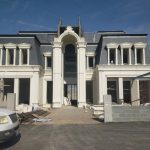
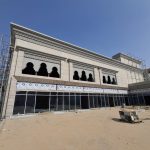
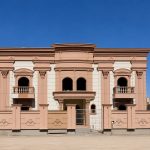
One of the most important advantages of modern architectural facades made from GRP is their ability to be shaped easily, allowing the production of curved and complex designs at a lower cost. GRP also performs well under continuous exposure to environmental conditions compared to some traditional materials.
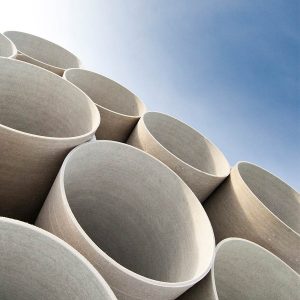
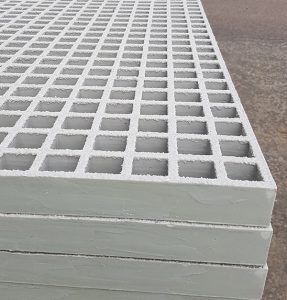
GRP Facade Design and Flexibility
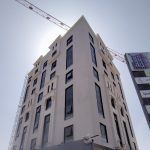
GRP is significantly lighter than GRC, making it highly suitable for tall buildings or projects that require reduced structural loads.
Its lightweight nature enables faster installation with lower transportation and lifting costs.
In GRP facade design, architects can create unconventional shapes such as curved panels and dynamic architectural elements that add visual movement to the facade. This makes GRP an excellent choice for commercial buildings, hotels, and entertainment projects seeking a modern and distinctive appearance.
Practical Applications of GRP
GRP is widely used in exterior panels, canopies, lightweight decorative elements, and interior cladding systems.
It is also well-suited for marine and coastal projects because of its high resistance to moisture, salts, and seawater.
In addition, modern architectural facades made from GRP provide a cost-effective solution for medium and small-scale buildings that do not require heavy structural thicknesses.
GRP offers a strong balance between cost efficiency, visual quality, and long-term durability.
To learn more about our solutions, explore our services and discover how we support projects with high-quality manufacturing and execution standards.
Quick Comparison Between GRP and GRC
Unlike GRC, which is cement-based, GRP is lighter and more flexible in shaping, although it is less rigid in heavy-duty structural applications.
For this reason, GRP is preferred for projects that require lightweight and fast-execution solutions.
GRP facade design is more suitable for buildings that emphasize movement and curved architectural forms, while GRC remains the preferred option for detailed decorative and classical architectural elements.
This diversity makes both materials complementary in large architectural projects.
GRP in the Local Market
In the Saudi and Gulf markets, GRP has become a popular choice for fast-track and temporary projects, as well as projects requiring simple on-site installation.
It is also widely used for canopies, sunshades, and exterior elements exposed to harsh weather conditions.
This growing demand reflects the market’s need for lightweight and flexible materials that align with the rapid construction pace associated with Vision 2030 and ongoing urban development projects.
Conclusion
GRP is considered an ideal architectural solution for projects seeking lightweight performance and flexibility in GRP facade design while maintaining high visual quality.
As modern architectural facades continue to evolve, GRP remains a practical and innovative option for a wide range of architectural applications.
Get Takween solutions with ease, and contact us today to support your project with high-quality execution.
Sales & Customer Service:
+966548474372 | +966593513991
Sales Email:
[email protected]

لا تعليق